Keychains are used every single day. Compare metals, finishes, attachments, and packaging to choose a custom keychain that survives daily wear.
A keychain is handled more often than any other item in a promotional program, which is exactly why it fails so visibly when it is ordered on price alone. Thin plating wears through, split rings deform, and a heavy pendant on a weak attachment ends up in a drawer — after you have already paid for 20–35 days of production and the 7–10 days of sampling that preceded it.
Custom keychains are specified piece by piece: body, hardware, finish, and packaging. Get those four right and the item stays on someone’s keys for years.
Type |
How It Is Made |
Best For |
Die-cast metal with enamel |
Molten alloy molded, then enamel filled |
Shaped designs with color and relief |
Die-struck / engraved metal |
Stamped and engraved, then plated |
Fine lines, logos, single-color looks |
Spinning or multi-part metal |
Two or more layers that rotate |
Interactive keepsakes and commemoratives |
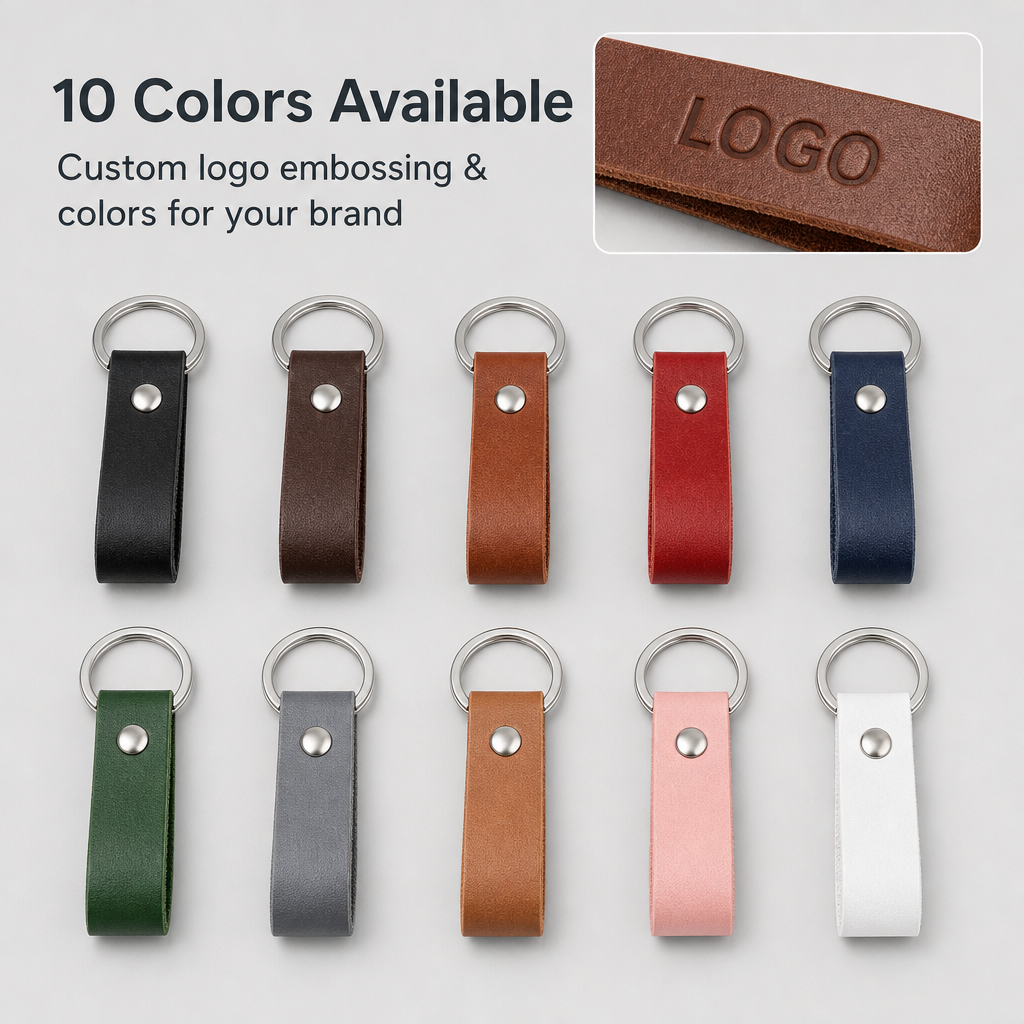
Leather or PU with metal plate |
Metal emblem fixed to a strap |
Corporate and hospitality gifts |
Trolley coin keychains |
Removable token in a holder |
Retail, supermarket, and travel promotions |
Body thickness: A heavier body resists bending and holds its shape against keys and pockets.
Plating quality: Plating is the first thing to wear on a keychain; specify it deliberately rather than accepting a default.
Edge finishing: Rounded edges and smooth cut-outs prevent snagging on pockets and bags.
Attachment strength: The ring or chain fails before the body does — it deserves as much attention as the design.
Weight balance: A very heavy pendant strains a small ring; match the hardware to the weight of the piece.
Split ring: The standard choice for keys; specify the ring diameter against the number of keys expected.
Chain and swivel hook: Keeps the item hanging naturally and suits bag clips and belt loops.
Carabiner or clip: Convenient for outdoor, travel, and utility programs.
Bottle-opener integration: Turns a giveaway into a tool people keep — popular for events and hospitality.
Double-sided designs: Both faces can carry artwork, turning one keychain into two messages.
MOQ: 100–500 pcs depending on design complexity; higher volumes lower the per-unit price significantly.
Mold / tooling fee: One-time $100–$400 per design for die casting, shared across multiple designs if artwork allows.
Sample development: 7–10 days for 3D mockup plus physical sample approval.
Bulk lead time: 20–35 days — order 8–10 weeks before your campaign, event, or delivery date.
Fasteners and rings: Confirm ring size, chain type, and any additional hardware on the sample.
Packaging: Poly bags, backing cards, or gift boxes can be specified so items are ready to hand out.
Spares: Add 5–10% extra for replacements and late additions.
A keychain earns its cost only if it survives the pocket. The same die-striking, plating, and enamel craftsmanship behind our custom lapel pins and custom challenge coins goes into every Unitepins keychain. We offer free design mockups, no MOQ for samples, and factory-direct pricing from our 5,100 m² facility with 21 years of OEM/ODM experience.
Q: Can a keychain carry a different design on each side?
A: Yes. Double-sided designs are standard, which lets you put the brand mark on the front and a message, date, or campaign line on the back.
Q: Can we choose the hardware?
A: Yes — split rings, chains, swivel hooks, clips, and bottle-opener attachments can all be specified. Confirm the hardware on the physical sample.
Q: What is the minimum order?
A: MOQ typically starts at 100–500 pcs depending on design complexity. Sample development is available with no minimum.
Q: Can keychains be ordered together with pins and coins?
A: Yes. Combining items in one order keeps finishes and colors consistent and reduces shipping cost.
Q: How long will a custom keychain last?
A: With a solid body, quality plating, and a strong ring, a metal keychain is built for years of daily use. The attachment and plating are the parts that determine real-world life.

Our custom products include lapel pins, 3M Sticker Pins, Challenge coins, Golf ball marker, Keychains, Medals, Bottle openers, Belt buckles, Cuff-links, Lanyards, etc.
 EN




 Hot News