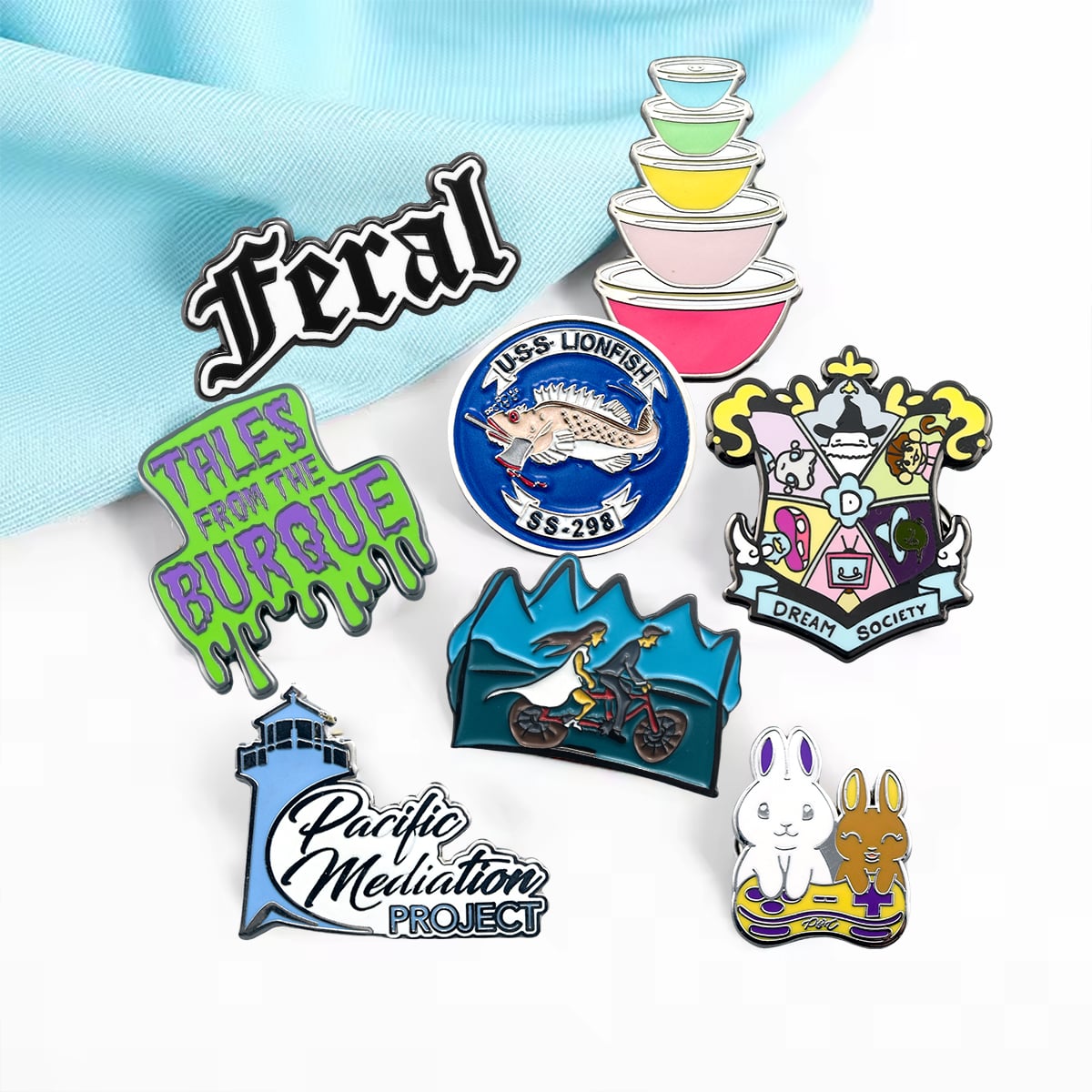
21-year OEM/ODM factory, 5,100 m², free design mockups: lanyard width, hardware, print method and breakaway safety specified for B2B event orders.
A lanyard order rarely fails on the print. It fails at the fitting: the hook that will not take the badge holder, the badge that hangs at the wrong height, the artwork that reads beautifully across 20 mm and turns illegible at 15. With sampling at 7–10 days and production at 20–35, the fitting is normally specified last and changed first — which is why the order placed in a hurry is the one that arrives with hardware nobody wanted.
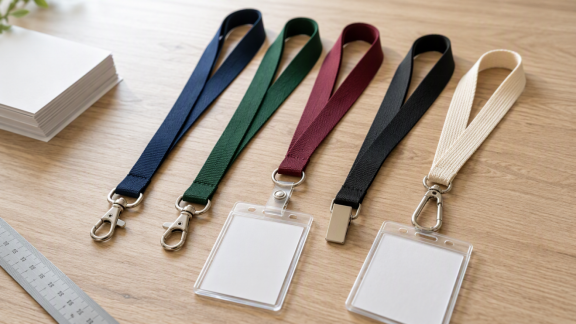
A custom lanyard with logo order looks simple and carries a specification list longer than most buyers expect: construction, width, length, fitting, attachment, safety, then print. Taken in that order it goes smoothly; taken backwards, it does not.
Construction |
How the Surface Is Marked |
Feel & Durability |
Best For |
Watch Out For |
Tubular polyester |
Screen print or heat transfer |
Light, soft, lowest cost |
High-volume events, staff ID |
Print sits on the surface and abrades with heavy use |
Flat woven polyester |
Woven logo or print |
Firmer, denser, wears well |
Corporate, retail, resale |
A woven logo needs width to stay legible |
Nylon |
Smooth, thin, strong |
Conferences, badge programmes |
Slippery surface; clips slide along the strap |
|
Cotton or bamboo |
Natural matte, soft hand |
Eco programmes, retail |
Takes up moisture; colour shifts after washing |
|
Jacquard woven |
Logo woven into the webbing |
Thick, premium |
Executive kits, premium giveaways |
Setup cost and a slower sampling round |
Width is a design constraint, not a preference: 10, 15, 20 and 25 mm are the common widths. Below 15 mm a detailed logo loses its letter counters, and no amount of print resolution recovers them.
Length decides where the badge sits: 900 mm is the usual finished loop, but a longer loop hangs lower on the chest — check it against the badge holder rather than against a tape measure.
The fitting and the attachment must match: A swivel hook, lobster claw, bulldog clip and carabiner each attach differently, and each expects a different holder. A mismatch is the single most common reason a lanyard feels wrong in the hand.
Safety breakaway is a construction decision: Schools, factories and many venues require a breakaway clasp. It changes how the strap is assembled, so it cannot be added after production.
Stitching shows in daily use: Double-stitched strap ends outlast single stitching on any lanyard worn five days a week.
Legibility at the final width: Check the artwork at 100 per cent on the real 15 or 20 mm, not on a monitor. Detail that survives a screen does not survive a repeat pattern.
Registration on narrow repeats: Screen printing charges per colour, and misregistration shows most clearly where a small logo repeats along the strap.
Edge bleed: A print that stops short of the seam leaves a band of base webbing visible at both edges — the first thing a retail buyer notices.
Repeat alignment: A repeated logo needs a defined repeat length before artwork is finalised, or the pattern drifts over the length of the strap.
Abrasion and washing: Heat transfer generally survives washing better than a surface screen print on polyester; if the lanyard will be washed, specify accordingly.
Most of the specification above exists because of where the product is used. The custom event lanyards that last longest are the ones matched to a specific job:
Trade shows and conferences: Badge plus lanyard is the cheapest identity system available, and it is collected by everyone who walks in.
Workplace and factory access: Visitor passes and contractor IDs are worn daily, which makes stitching quality and plating on the fitting the deciding factors.
Retail and hospitality: Staff ID and hotel key cards: the lanyard is part of the uniform, so colour matching to the brand matters more than print complexity.
Schools and campuses: Breakaway fittings are usually mandatory, and quantities are large but budgets are fixed.
Sports events and festivals: Short lead times and high volumes; tubular construction is usually the only cost-viable route.
Resale and distribution: Distributors buy the packaging as much as the strap — individual bags, a header card and a carton count that suits their shelf.
MOQ depends on construction: It typically starts at 100–500 pcs depending on the construction and print method; sample development has no minimum.
Ask for a physical fitting sample: A photograph cannot tell you whether a lobster claw opens smoothly or whether the swivel turns under load.
Mark the repeat length on the artwork: It removes a revision round, and revision rounds are what put an event order late.
Decide the packing method: Individual poly bag or bulk in cartons changes the labour, the carton size and therefore the freight.
Build the schedule backwards: Sampling 7–10 days, production 20–35 days after approval, then freight — a jacquard logo adds setup time ahead of sampling.
An event kit usually needs more than lanyards: badges, custom lapel pins for speakers, and often coins for an awards moment. Producing them on the same lines means one artwork approval, one schedule and one carton plan instead of three. Every Unitepins order includes free design mockups and no MOQ for samples, from a 5,100 m² facility with 21 years of OEM/ODM experience.
Q: What width should a custom lanyard be?
A: 15 mm suits most badges and logos, 20 mm gives a logo more room, and 10 mm works for simple text. Detailed marks lose their letter counters below 15 mm.
Q: What is the difference between tubular and flat lanyards?
A: Tubular is a sewn tube — lighter, softer and cheaper. Flat woven is a denser strap with a firmer hand and better abrasion resistance.
Q: Do I need a breakaway clasp?
A: If the lanyard is worn in a school, a factory, a kitchen or a public venue, check the requirement before ordering. It changes the construction and cannot be added after production.
Q: How long does production take?
A: Sampling runs 7–10 days and bulk production 20–35 days after approval. A jacquard woven logo adds setup time before sampling.
Q: What is the minimum order?
A: MOQ typically starts at 100–500 pcs depending on construction and print method, and sample development has no minimum.

Our custom products include lapel pins, 3M Sticker Pins, Challenge coins, Golf ball marker, Keychains, Medals, Bottle openers, Belt buckles, Cuff-links, Lanyards, etc.
 EN




 Hot News