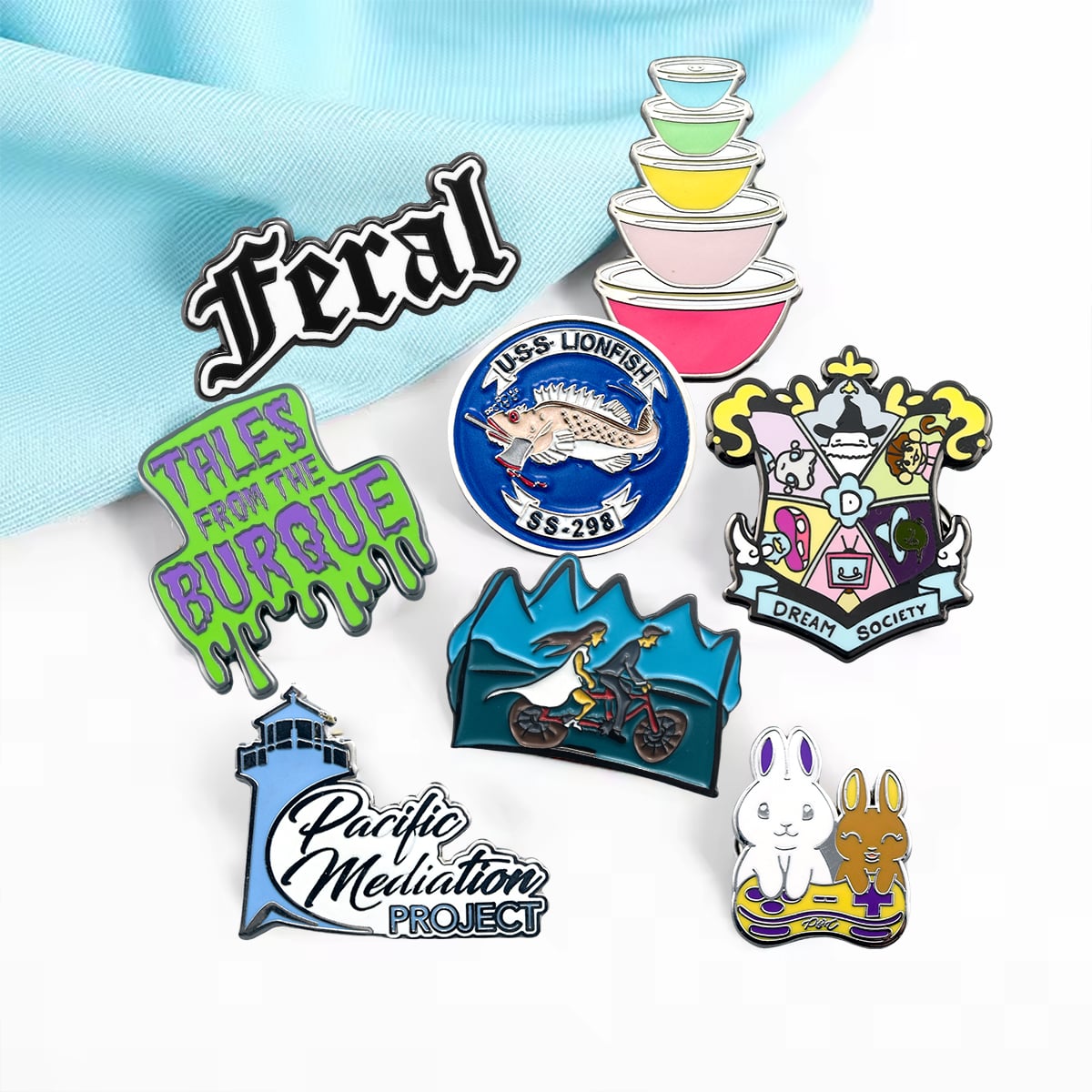
Every order starts at a screen, not a machine. Before anything is cut, the file is checked for line weight, minimum text height and color count, because each extra color adds a filling step and one more chance of misregistration. Only a signed file goes to the engraver. For custom lapel pins this is also where a design is trimmed back to something that survives at 25 mm.
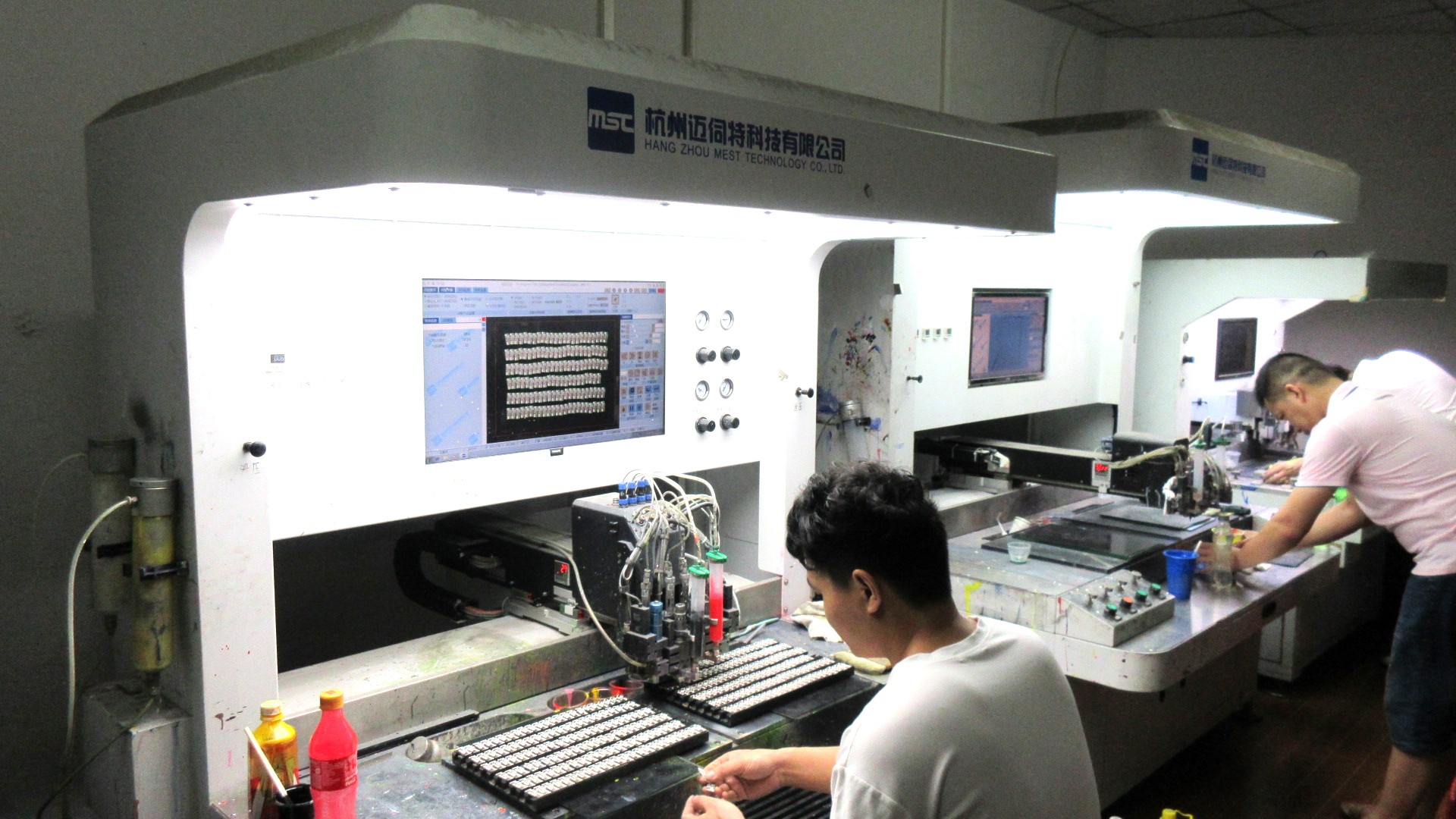
Color filling: one color at a time, then baked.
Mold engraving. The die is cut from the approved file. Shape changes after this point restart the schedule; color changes do not.
Stamping or die casting. Zinc alloy is struck for flat and shallow-relief designs, or cast when the relief is deep or the run is short. The choice is made per design, not per customer.
Trimming and polishing. Burrs come off before polishing, and polishing comes before plating. A scratch that survives polishing survives plating for the life of the piece.
Plating. Nickel, brass, gold, black nickel or dyed finishes. Even thickness across the batch matters more than the color name on the invoice.
Coloring. Automatic filling covers large flat color fields; small recesses and multicolor work are filled by hand, one color at a time, then baked.
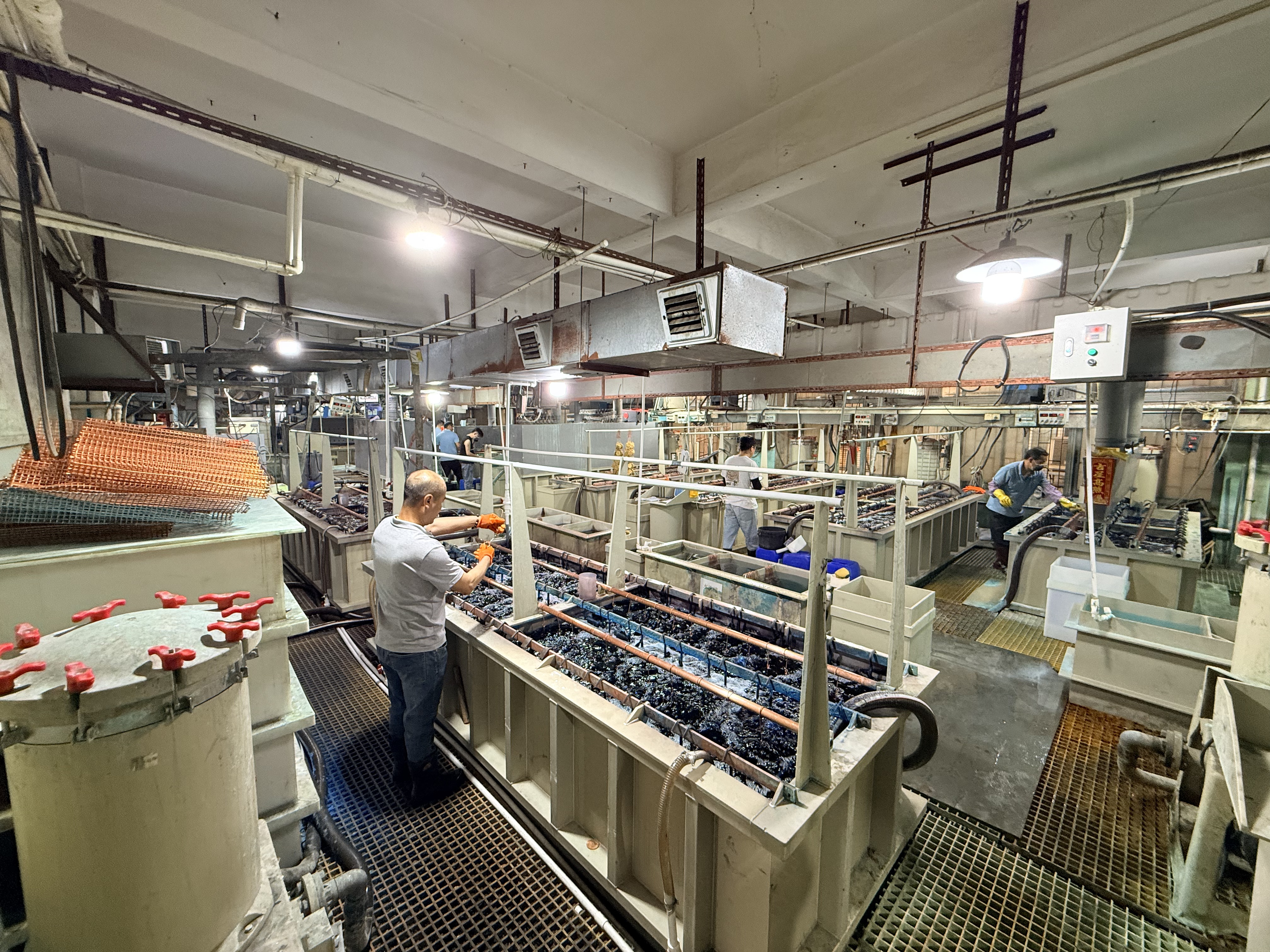
Plating: even thickness across the batch matters more than the color name.
Not at the machines. An order slows down when the color count is decided late, when a six-color design is quoted as if it were two, or when the plating finish is changed after the samples were approved. Each of those adds a step that cannot be recovered by working faster afterwards.
Sampling runs 7–10 days from approved artwork, and bulk production 20–35 days after approval. A color change in week four is therefore not a delay in week four — it is a delay in the shipping week.
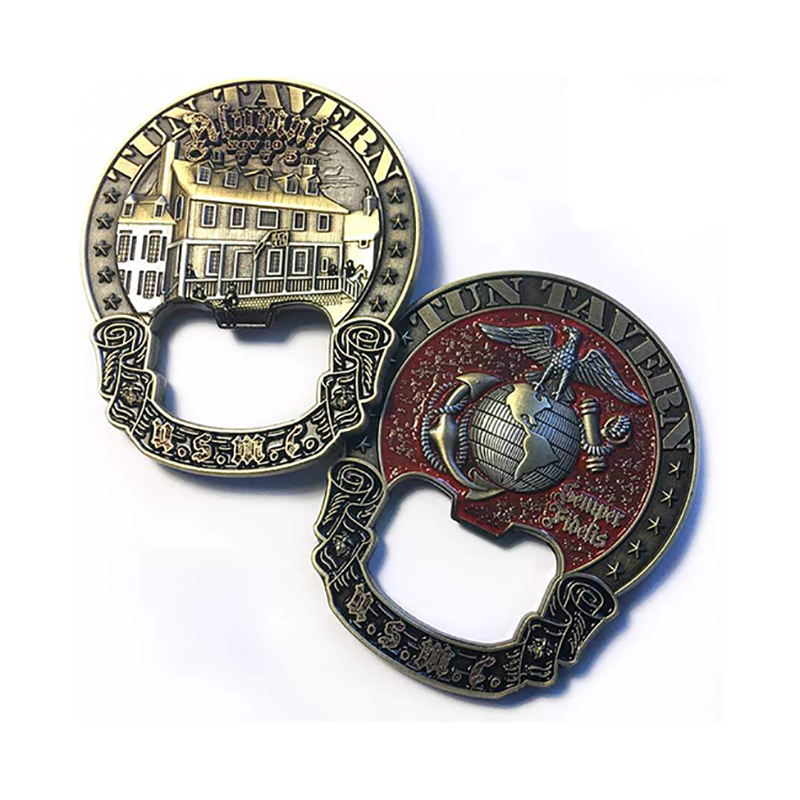
Every piece passes a visual bench after plating and again after coloring: enamel depth, chipped edges, plating tone against the approved sample, and the function of the pin backing, where a clutch that does not grip fails the same inspection as a scratch. Then come packing, carton count and the shipping documents. Challenge coins and keychains go through the same bench, with the clutch test replaced by a second look at plating and enamel.
Unitepins has 21 years of OEM/ODM experience, a 5,000 m² facility and about 500 staff, making pins, coins, keychains, medals, belt buckles and patches for B2B buyers. Visitors are welcome year round, and one afternoon covers the line, the sample room and the packing area. If you cannot come, ask for a video call from the floor rather than a catalog; the machines are the ones in these photographs.

Our custom products include lapel pins, 3M Sticker Pins, Challenge coins, Golf ball marker, Keychains, Medals, Bottle openers, Belt buckles, Cuff-links, Lanyards, etc.
 EN




 Hot News