 EN
EN


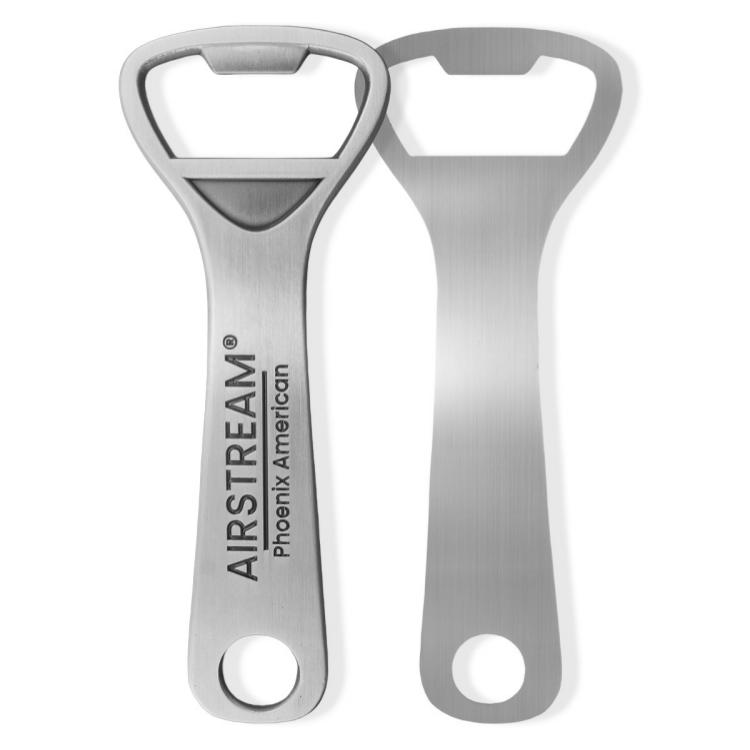
A bottle opener is more than a cap remover. Put one in a customer's pocket or on their keychain and it becomes a daily brand touchpoint — used at home, at parties, at the office — while most promotional items sit in a drawer and get forgotten.
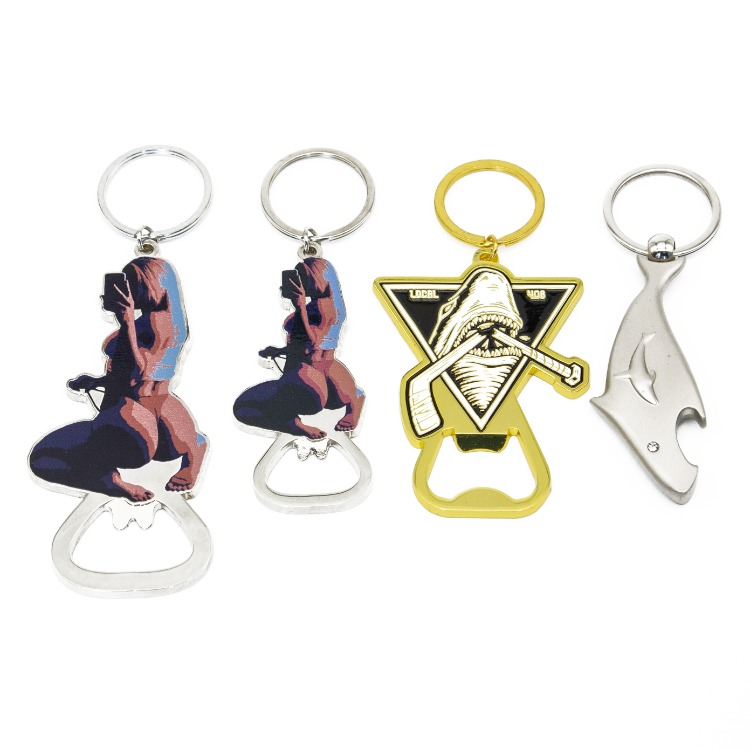
That combination of utility and visibility is exactly why openers deliver some of the highest ROI in promotional marketing. For procurement teams and brand managers, this guide covers the functional design, customization options and distribution strategies that turn a simple tool into a working advertising channel.
Why Openers Outperform Other Giveaways
Before specifying a product, compare openers with the usual merchandise lineup:
| Giveaway | Typical use frequency | Brand exposure | Lifespan | Main risk |
|---|---|---|---|---|
| Bottle opener | Weekly or daily | Every use, plus observers | Years (metal) | Low — actually used |
| Branded T-shirt | Occasional | Wearer only | 6–24 months | Ends up in a drawer |
| Ceramic mug | Daily | User only | 1–3 years | Stays at the office |
| Ballpoint pen | Frequent | User only | Weeks–months | Easily lost |
| USB drive | Occasional | User only | 1–2 years | Becomes obsolete |
Openers win on simple logic: they are used in social settings, where other people see the logo in action — exposure no drawer-bound item can deliver.
Functional Design: Function First, Branding Second
A bottle opener that fails at its core job damages the brand it carries — slipping, requiring excessive force or chewing up caps creates frustration, not loyalty. The engineering baseline for a quality unit:
- Precise metal construction — 304 stainless steel or zinc alloy (ZAMAK-3)
- Calculated lever geometry that opens with one clean motion
- Ergonomic grip — contoured handle, textured surface, balanced weight
- Corrosion-resistant finish (nickel/chrome plating 10–25 µm or powder coating 60–120 µm)
- Load-tested opening edge that survives thousands of cycles
Durability matters commercially: a product that breaks after a few uses turns recipients into critics. Premium materials and reinforced joints keep a giveaway working — and advertising — for years.
Ergonomics and Portability
The easier an opener is to carry, the more often it gets used — and the more often the brand gets seen. Form factors worth considering for a campaign:
- Keychain openers (highest retention — always on hand)
- Pocket-sized flat openers (wallet or pocket carry)
- Multi-tool designs (utility drives repeat use)
- Wall-mount or bar models (constant visibility in bars, garages, offices)
Ergonomics must suit every hand size and grip strength: contoured handles distribute force, textured grips prevent slipping with wet hands. When carrying is effortless, recipients treat it as their own tool — and recommend it to friends.
Customization: Making the Logo Work
Customization is where brand impact is actually built. A custom bottle opener carries logos, taglines or URLs through several proven decoration routes:
| Decoration method | Best for | Minimum detail | Durability | Look |
|---|---|---|---|---|
| Laser engraving | Stainless steel, aluminum | 0.1 mm line width | Permanent, never wears off | Metallic, premium |
| Embossing (raised relief) | Zinc alloy, stainless | 0.3 mm relief | High | 3D, tactile |
| Screen printing | Flat metal faces | 0.2 mm | Moderate (needs topcoat) | Full color, low cost |
| Enamel fill | Zinc alloy | Fine detail | High (hard enamel) | Colorful, badge-like |
Placement is just as important as the method. Branding belongs on surfaces that stay visible during use — the handle and the flat face that points up when the bottle is opened. High-contrast brand colors and bold type register faster than small, low-contrast logos. Done well, a custom bottle opener signals the quality and attention to detail recipients project onto the brand itself.
Distribution: Getting It Into the Right Hands
A promotional bottle opener only pays off if it reaches the right audience. Proven distribution contexts:
- Trade shows and industry events — decision-makers carry them home
- Corporate and customer appreciation events — strengthens relationships
- Employee kits — turns staff into brand ambassadors
- Sales incentive programs — rewards with daily-use value
- Retailer and distributor giveaways — extends reach to end consumers
The principle is the same in every context: hand the product out where the audience gathers, and let its utility keep the brand visible long after the event ends.
Measuring Promotional ROI
Track promotional value rather than assuming it. Useful indicators:
- Retention: units still in use 6–12 months after distribution
- Social proof: customer photos and mentions on social media
- Word-of-mouth: recipients recommending the brand to others
- Repeat requests: recipients asking for more units for friends or colleagues
An opener that keeps generating exposure months after the event delivers marketing value far beyond its production and distribution cost — which is the whole point of choosing functional giveaways in the first place.
FAQ
What makes a bottle opener effective as a promotional product?
Reliability, frequency and visibility. It must open bottles flawlessly every time, be carried and used regularly, and show the logo during use. A unit that meets all three generates repeated brand exposure at a fraction of the cost of traditional advertising.
Which customization method should we choose?
Laser engraving for a premium metal look on stainless steel; enamel fill when the logo needs full color; screen printing for large volumes at low cost. Consider the recipient: engraved units read as high-quality gifts, while printed units suit mass giveaways.
How long does a promotional bottle opener stay in use?
A well-made metal unit typically lasts years. With quality materials, a protective coating and tested mechanics, retention at 12 months is realistic — meaning brand exposure continues long after the campaign budget has been spent.