 EN
EN


|
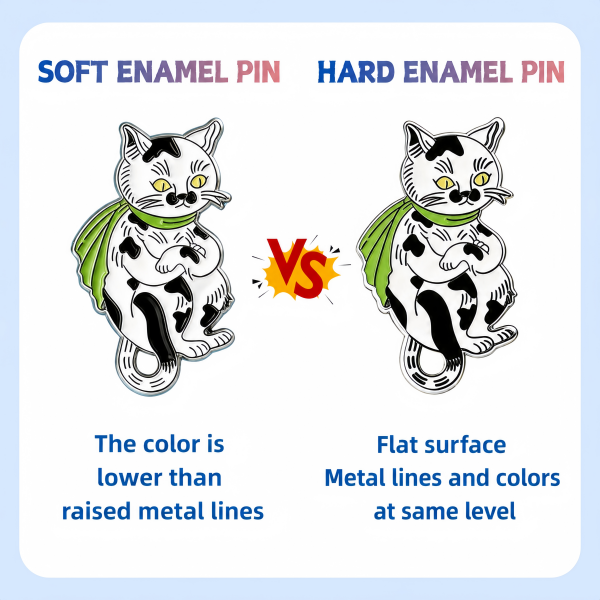
Soft enamel and hard enamel pins are popular for branding, retail, events, staff awards and promotions. Your perfect pick relies on three points: desired look, usage scenario and budget. Soft enamel features textured surfaces with raised metal borders; hard enamel delivers a sleek flat polish. Knowing their differences lets corporate buyers match pins to their designs, audiences and business targets.
|
What Is the Difference Between Soft and Hard Enamel?Soft enamel pins are made by filling colored enamel into recessed areas between raised metal lines. Because the enamel sits slightly below the metal borders, the surface has visible depth and a textured feel. This finish makes logos, lettering, and colorful illustrations stand out clearly. Soft enamel can also support options such as glitter, translucent colors, glow-in-the-dark enamel, printed details, or a clear epoxy coating. Hard enamel pins are produced by adding enamel in several stages and polishing the surface until the colors are level with the metal lines. The finished pin feels smooth and flat, creating a more refined appearance. Hard enamel is often selected for simple logos, corporate badges, membership pins, awards, and retail collections. Both styles can use custom shapes, Pantone colors, gold or silver plating, back stamps, and different attachments.
|
Which Enamel Style Is Better for Business Use?Soft enamel fits promotions, sports meets, schools, clubs and bulk merch. Raised metal lines deliver sharp contrast for tiny pins, and it costs less for large orders, ideal for free gifts, event goods and multi-design collections. Hard enamel boasts a sleek, formal finish perfect for corporate gifts, staff awards and premium member badges. Higher price does not equal better quality: vivid illustrated designs shine with soft enamel, while simple brand logos look more elegant in hard enamel. Businesses should decide based on usage scenarios and audience expectations.
|
How Should Buyers Choose the Right Enamel?Before ordering custom enamel pins,clarify your usage, target audience, price positioning and order quantity. Choose soft enamel for textured, vivid multi-color designs with special effects and budget constraints; go for hard enamel if smooth, formal and premium texture is your top priority. Your artwork also decides the match: detailed multi-color graphics with thick metal lines fit soft enamel, while neat minimalist logos work better with hard enamel. Finalize pin size, plating, colors, fittings, packaging, mold cost, lead time and shipping before approval. Carefully check digital proofs for text, line thickness, color layout and accessory positions, and get physical samples, as photos fail to fully display texture gaps between two enamel types.
|
ConclusionThere is no universally superior enamel type: soft enamel works for budget-friendly, textured bulk orders with rich colors, and hard enamel for sleek, formal premium pins. Match your pick to your design, audience, order size, price and marketing goals, and verify design proofs in advance to create ideal pins for branding and retail sales.
|