 EN
EN


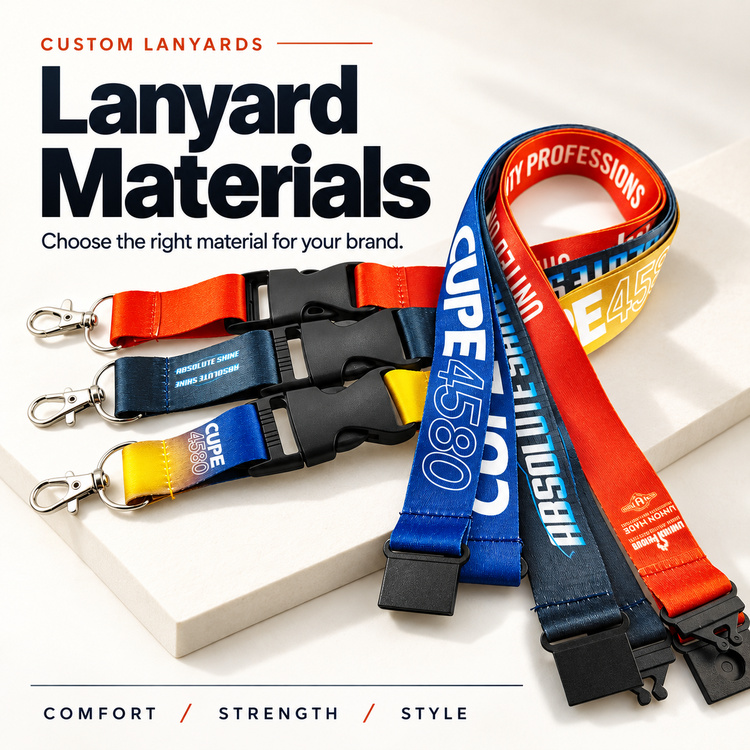
Selecting the right lanyard material affects much more than appearance. For businesses purchasing identification accessories in bulk, material choice influences durability, wearer comfort, branding quality, safety, maintenance, and overall cost. The best option depends on how the product will be used, how long it needs to last, and what environmental conditions it will face.
For applications involving badge holder attachment, employee identification, event access, or key card management, buyers should evaluate material performance before focusing on color or customization. Polyester, nylon, cotton, hemp, and blended fabrics each have different strengths. Comparing them based on actual usage can help procurement teams avoid unnecessary features and choose a material that will perform reliably.
Comparing Common Lanyard Materials
| Material | Durability | Comfort | Moisture Resistance | Cost Level | Recommended Applications |
|---|---|---|---|---|---|
| Polyester | High | Good | High | Low–Medium | Corporate, events, large-volume orders |
| Nylon | Very High | Good | High | Medium–High | Industrial, security, heavy-duty use |
| Cotton | Medium | Very High | Low–Medium | Medium | Offices, schools, indoor events |
| Hemp | High | High | Medium | Medium–High | Eco-conscious and premium applications |
| Blended Fabric | High | High | Depends on blend | Medium | Balanced performance applications |
This table provides a useful starting point, but buyers should also consider attachment hardware, production requirements, and expected service life.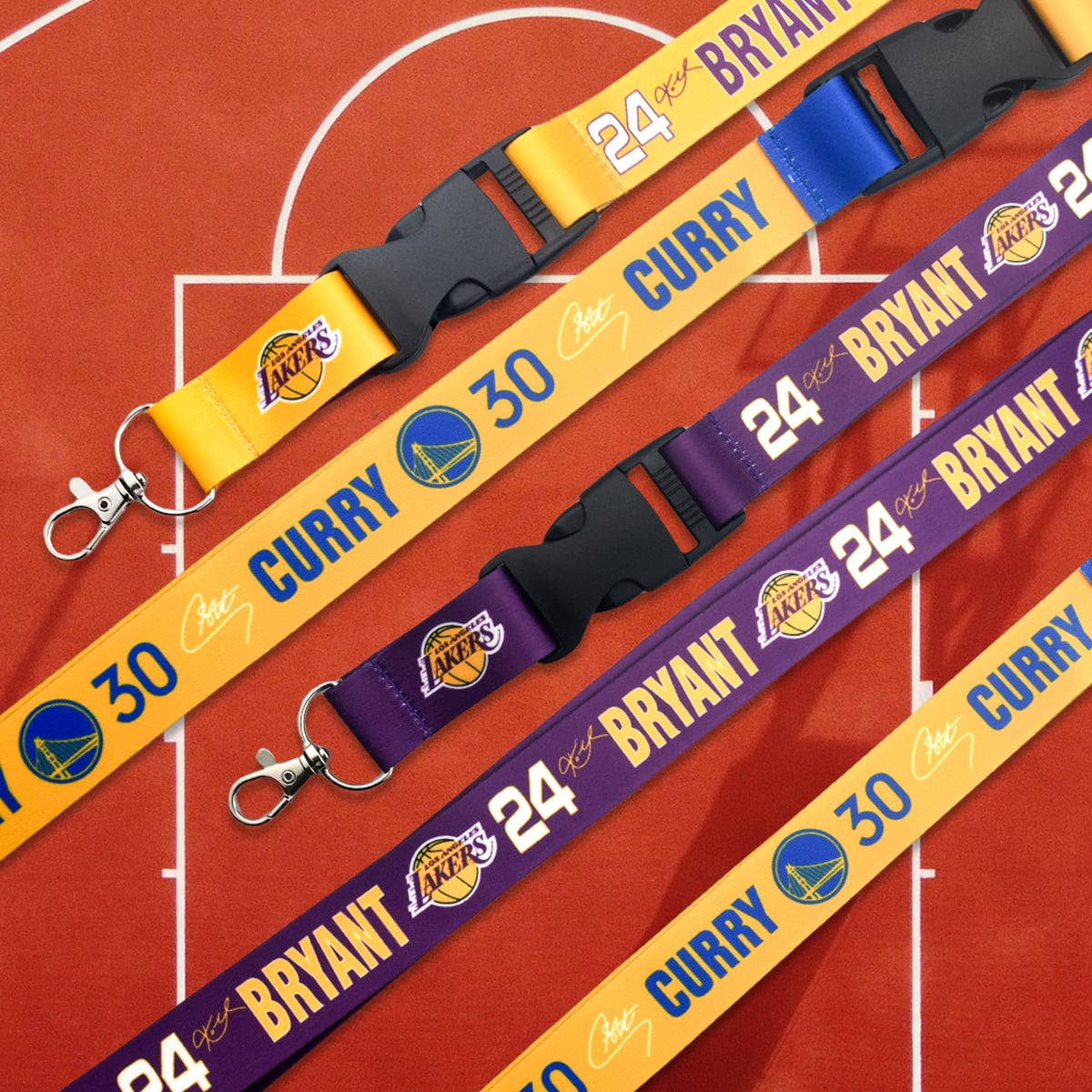
Polyester: A Practical Choice for Large-Scale Orders
Polyester is widely used because it offers a strong balance of durability, cost, and customization. It can handle daily use and moderate environmental exposure without excessive fraying or loss of strength. For companies ordering hundreds or thousands of units, this balance makes polyester a practical choice.
It also offers good resistance to moisture, mildew, and UV exposure, making it suitable for outdoor events, exhibitions, warehouses, and workplaces where humidity may vary.
From a branding perspective, polyester works well with screen printing, embroidery, and woven designs. Logos and text can be reproduced clearly, which is useful when identification and brand visibility are priorities.
For bulk purchasing, buyers should look beyond the initial unit price. A better-quality polyester construction may reduce replacement requirements and provide better value over the product's service life.
Nylon: When Strength Takes Priority
Nylon is a good choice when tensile strength, abrasion resistance, and long-term durability matter more than the lowest purchase price. Its strong fibers can withstand pulling and repeated mechanical stress, making it suitable for industrial workplaces, security environments, and applications involving heavier accessories.
For a key card holder with cord system, nylon can be useful when attached credentials or accessories are handled frequently. Its strength helps maintain structural integrity under demanding conditions.
The trade-off is cost. Nylon generally costs more than standard polyester, so procurement teams should consider total cost of ownership rather than comparing unit prices alone.
A simple calculation is:
Total Cost of Ownership = Purchase Cost + Replacement Cost + Maintenance Cost
If nylon lasts significantly longer in a demanding environment, its higher initial price may be justified.
Cotton and Hemp: Comfort and Sustainability
Natural fibers offer different advantages from synthetic materials. Cotton is soft and breathable, making it comfortable for employees who wear identification accessories throughout the day. It can be suitable for offices, schools, healthcare settings, and other controlled indoor environments.
Hemp provides another natural-fiber option with good durability and may appeal to organizations that place greater emphasis on sustainability.
The main limitation is environmental resistance. Cotton can absorb moisture and is more vulnerable to mildew, fraying, and visible wear than polyester or nylon. Natural fibers are therefore generally better suited to indoor environments than demanding outdoor or industrial applications.
For products using neck strap safety release components, the fabric should also be evaluated together with the hardware. Comfort alone does not guarantee that the complete assembly is appropriate for the working environment.
Blended and Specialty Materials
Blended fabrics can provide a practical balance between synthetic durability and natural-fiber comfort. Polyester-cotton blends, for example, can improve softness while retaining reasonable strength and dimensional stability.
Special treatments can also change material performance. Depending on the application, buyers may consider moisture-wicking properties, antimicrobial finishes, or water-resistant coatings.
These options can be useful in healthcare, food-service, outdoor, and other specialized environments. However, additional treatments increase production costs, so they should be specified when there is a clear functional need rather than simply added as premium features.
How to Choose the Right Material for B2B Applications
Before placing a bulk order, procurement teams should review several practical factors:
Intended environment: Determine whether the product will be used indoors, outdoors, in humid areas, or around chemicals.
Expected service life: Estimate how frequently the product is likely to require replacement.
Attached load: Consider the weight of badges, cards, keys, clips, or other accessories.
Wearing time: All-day users may benefit from softer and more breathable materials.
Branding requirements: Check whether the material supports the required printing, embroidery, or woven graphics.
Safety requirements: Confirm that the attachment hardware and neck strap safety release mechanism suit the application.
Order volume: Evaluate unit price together with production consistency and replacement costs.
Quality control: Confirm tolerances, stitching quality, color consistency, and hardware attachment before mass production.
Looking at these factors together gives buyers a clearer picture of the product's long-term value.
Material Selection by Application
The most suitable material depends heavily on the working environment. A corporate office with controlled temperature and humidity may prioritize comfort and appearance, while a warehouse or industrial facility may place greater emphasis on abrasion and moisture resistance.
For conferences, exhibitions, and promotional events, polyester is often practical because it combines competitive pricing with strong branding potential. Security and heavy-duty applications may justify nylon, while eco-focused organizations can consider cotton or hemp when the environment is suitable for natural fibers.
For any application involving a lanyard and badge holder attachment, buyers should also check whether the width, thickness, stitching, clip, and release mechanism are compatible with the selected material.
FAQ
Which material offers the best balance between cost and durability?
Polyester is generally the most balanced option for large-scale applications. It provides good strength, moisture resistance, branding flexibility, and competitive pricing.
When should I choose nylon instead of polyester?
Nylon is worth considering when the product will experience frequent pulling, abrasion, heavier loads, or demanding working conditions. Its higher purchase cost may be justified when longer service life reduces replacement frequency.
Are cotton lanyards suitable for outdoor use?
Cotton can work for occasional outdoor use, but prolonged exposure to moisture and humidity may accelerate wear. Polyester or nylon is generally better suited to long-term outdoor applications.
What should buyers check besides the material?
Material is only one part of the specification. Buyers should also evaluate width, thickness, stitching, hardware, attachment method, printing quality, safety release design, and production consistency.
Conclusion
Material selection should reflect the actual operating environment, expected service life, wearer requirements, and procurement budget. Polyester provides a strong balance for general-purpose and high-volume applications, while nylon offers greater durability for demanding environments. Cotton and hemp can prioritize comfort and sustainability, while blended and specially treated fabrics address more specific requirements.
By evaluating these factors together, buyers can select a lanyard that delivers reliable performance, consistent branding, and better long-term value instead of simply choosing the lowest-cost material.
Table of Contents
- Comparing Common Lanyard Materials
- Polyester: A Practical Choice for Large-Scale Orders
- Nylon: When Strength Takes Priority
- Cotton and Hemp: Comfort and Sustainability
- Blended and Specialty Materials
- How to Choose the Right Material for B2B Applications
- Material Selection by Application
- FAQ
- Conclusion