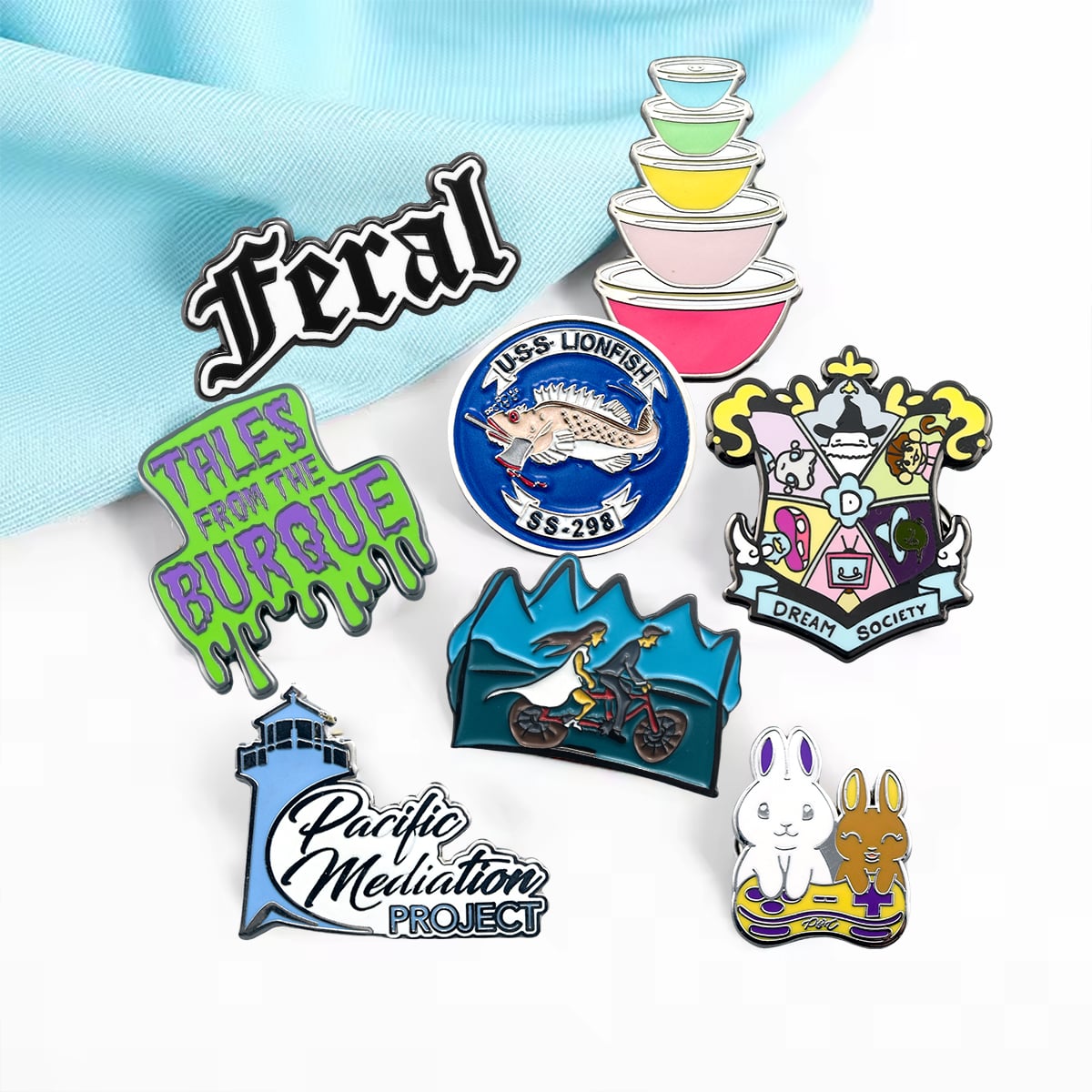
Pins, coins or keychains for client Christmas gifts? Compare value, personalisation and shipping cost — factory-direct from a 21-year OEM/ODM manufacturer.
Most client gift programmes are decided on unit price, and that is the number that predicts the least. What decides whether a gift survives the January desk clear-out is how it feels in the hand, whether it can carry one recipient’s name, and what it costs to ship — and on those three measures, pins, coins and keychains behave very differently.
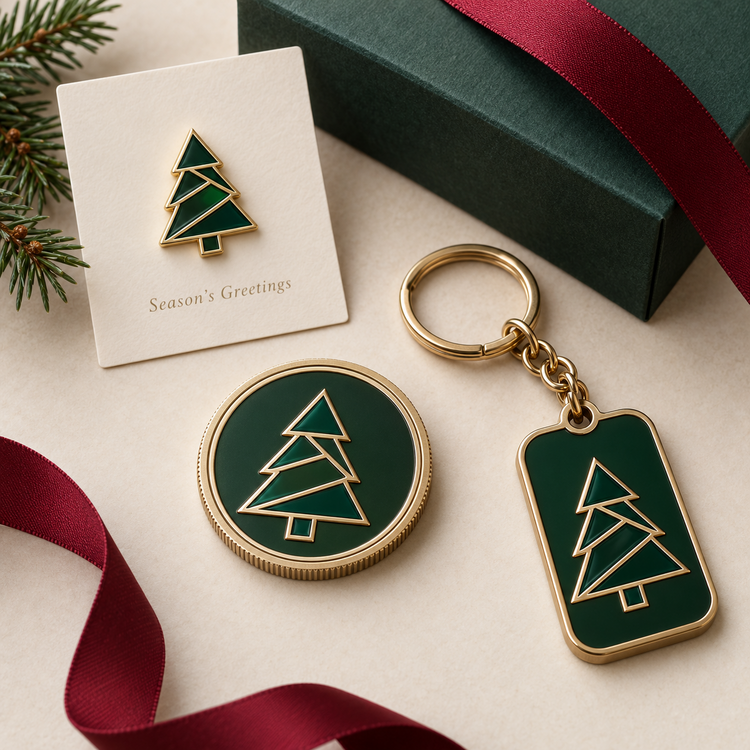
Comparing the three formats properly is really a question of what the gift has to do: reach a long list without bloating the budget, mark a handful of important relationships, or stay in daily use long enough to be seen every week.
Format |
Perceived Value |
Personalisation |
Freight Weight |
Best For |
Enamel lapel pin |
High for its size |
Shape, colour, printed card |
Very low |
Long lists, events, retail |
Challenge coin |
High — weight reads as substance |
Engraved name, date, unit number |
Moderate |
Key accounts, milestones, teams |
Keychain |
Mid — used every day |
Engraved text, enamel logo |
Low to moderate |
Practical audiences, driver and trade gifts |
Combination set |
Highest |
All of the above |
Highest |
Top-tier accounts only |
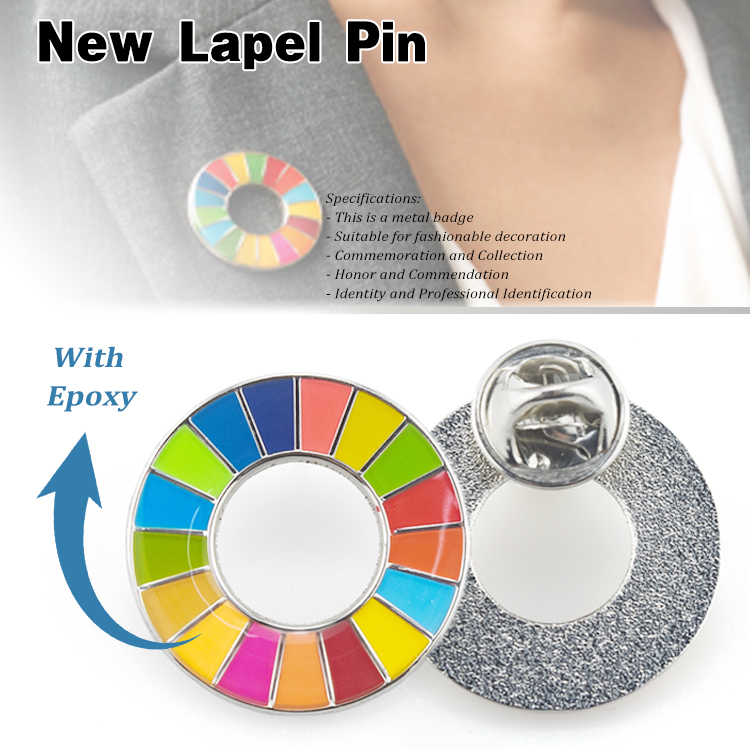
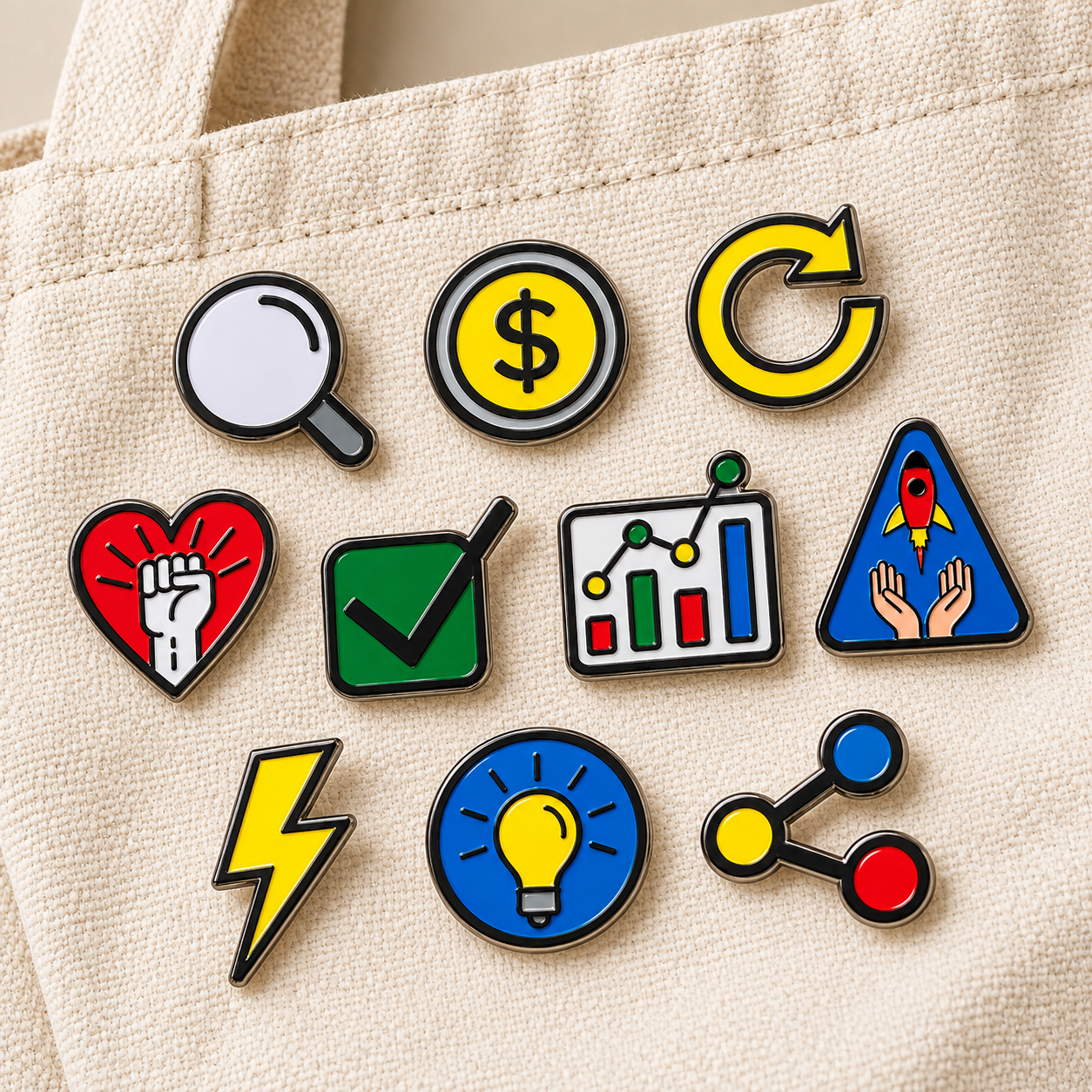
At small sizes, custom lapel pins deliver the lowest cost per recipient of the three formats, which is what makes them work across a long client list rather than a short one.
Personalisation is cheap where it is visible: A printed backing card carries the recipient’s name and your message for a fraction of what per-piece engraving costs.
Presentation is adjustable: The same pin moves from bulk handout to gift with nothing more than a pouch or a card behind it.
Watch the small-size limit: Fine logos and thin lettering disappear below roughly 20 mm; simplify before sampling rather than after.
Where it underperforms: A pin is worn occasionally, so it earns attention in bursts rather than daily.
A custom challenge coins communicate value without a price tag, because the first thing a recipient does is weigh it in the hand — which is why they suit a short list of accounts that matter.
Personalisation belongs on the coin itself: Engraved names, dates or account numbers sit naturally on the face or edge and read as deliberate rather than decorative.
Die-struck versus die-cast: Die-struck holds finer relief on both faces and a sharper edge; die-cast suits deeper, more sculptural designs.
Edges carry detail for free: Reeded, diamond-cut or personalised edge treatments add perceived value without changing the artwork.
The trade-off is freight: Weight is the point, but it is also the cost: large quantities raise shipping noticeably compared with pins.
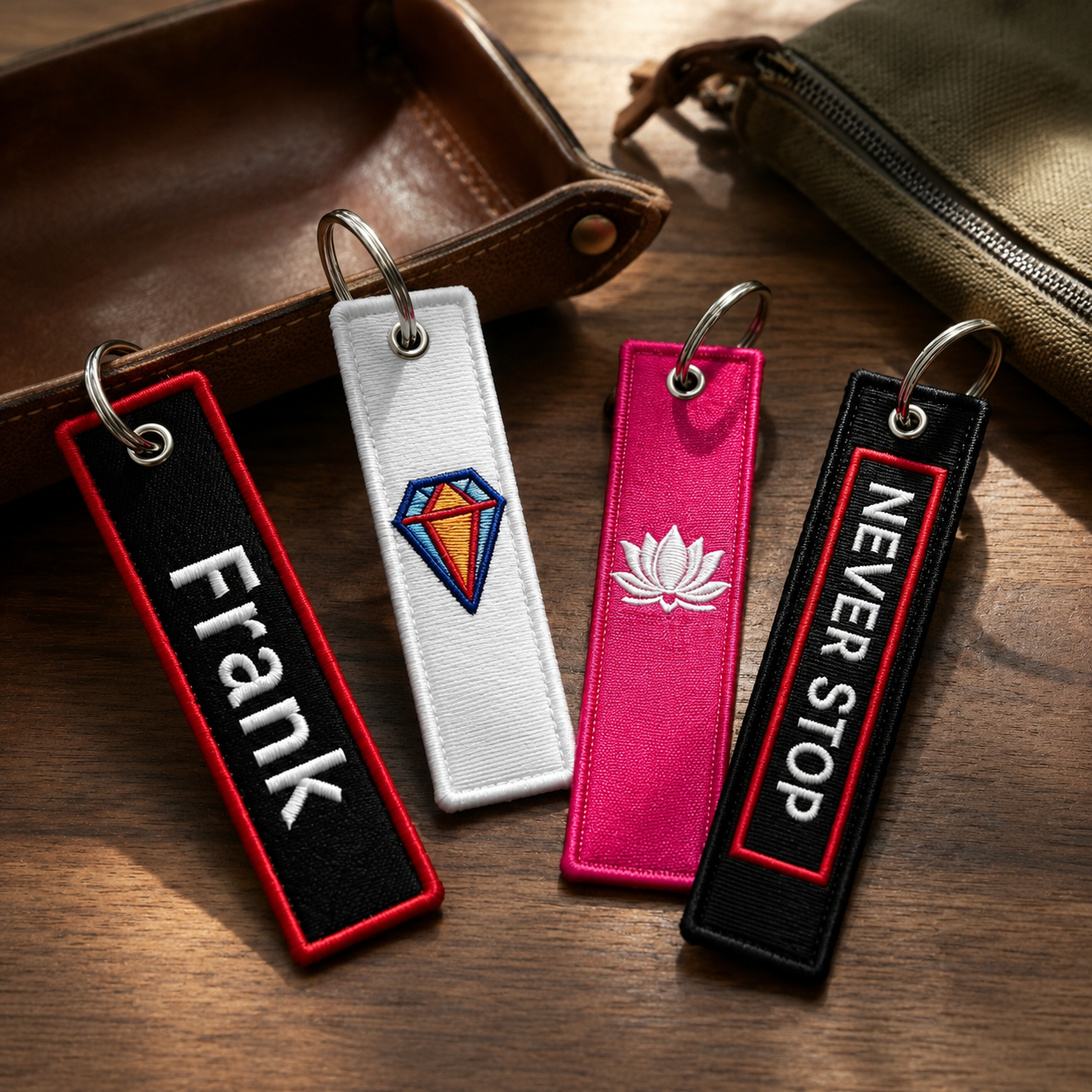
A custom keychains is handled several times a day, which gives it more cumulative exposure than a pin that is worn occasionally — useful when the audience is practical rather than ceremonial.
Durability beats decoration: Keys and pockets abrade plating, so specify a harder finish and keep soft enamel off the most exposed face.
Engraved text without colour is economical: A deep engraved logo or name needs no enamel work, which keeps the unit cost close to a pin.
Pair it with a functional element: A bottle opener, bottle-opener tag or split ring makes the item useful rather than purely decorative.
Tier by account value, not by taste: A pin for the broad list, a coin for strategic accounts, and a combination set for the handful that justify it.
Keep one motif across all three: A single approved artwork used across formats reads as one campaign instead of three unrelated gifts.
Personalise where it is seen in use: The backing card, the coin face and the keychain tag are the three surfaces that stay visible.
Settle presentation with the order: Cards, pouches and boxes have their own proofing and can move the delivery date if added later.
Build the schedule backwards: Sampling takes 7–10 days and production 20–35; late October is the practical cut-off for a December delivery.
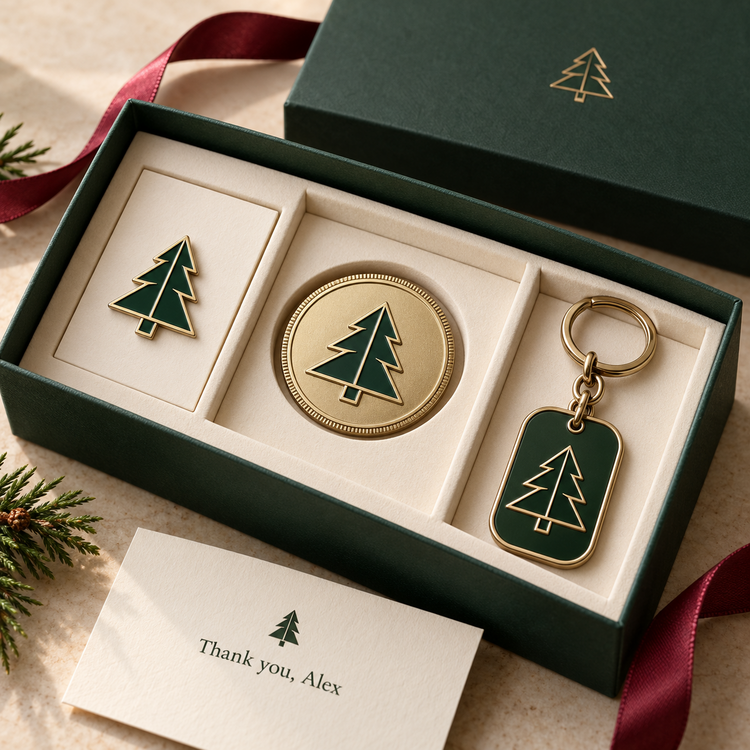
Ordering all three formats from one factory keeps the plating tone and enamel colours consistent across the set, and removes the handoff where dates usually slip. Every Unitepins order runs on the same die-striking and plating lines, with free design mockups and no MOQ for samples, from a 5,100 m² facility with 21 years of OEM/ODM experience.
Q: Which format suits a large client list on a fixed budget?
A: Pins. They carry the lowest cost per recipient, and a printed backing card adds a personal name without adding much to the unit price.
Q: Can the pin, coin and keychain share one design?
A: Yes, and they should. One approved motif across all three formats reads as a single campaign, and it also reduces the artwork work to one approval round.
Q: Do keychains wear out faster than pins?
A: In daily use, yes — abrasion from keys and pockets is harder on plating than occasional wear. Specify a harder plating and keep soft enamel off the exposed face.
Q: How much personalisation is realistic?
A: Engraved names, dates and account numbers are routine on coins and keychain tags. Per-piece enamel colour changes are not, so keep colour standard and personalise the text or the card instead.
Q: When should a client Christmas gift order be confirmed?
A: Allow 7–10 days for sampling plus 20–35 days for production, with freight on top. Late October is the practical cut-off for delivery before Christmas.

Our custom products include lapel pins, 3M Sticker Pins, Challenge coins, Golf ball marker, Keychains, Medals, Bottle openers, Belt buckles, Cuff-links, Lanyards, etc.
 EN




 Hot News