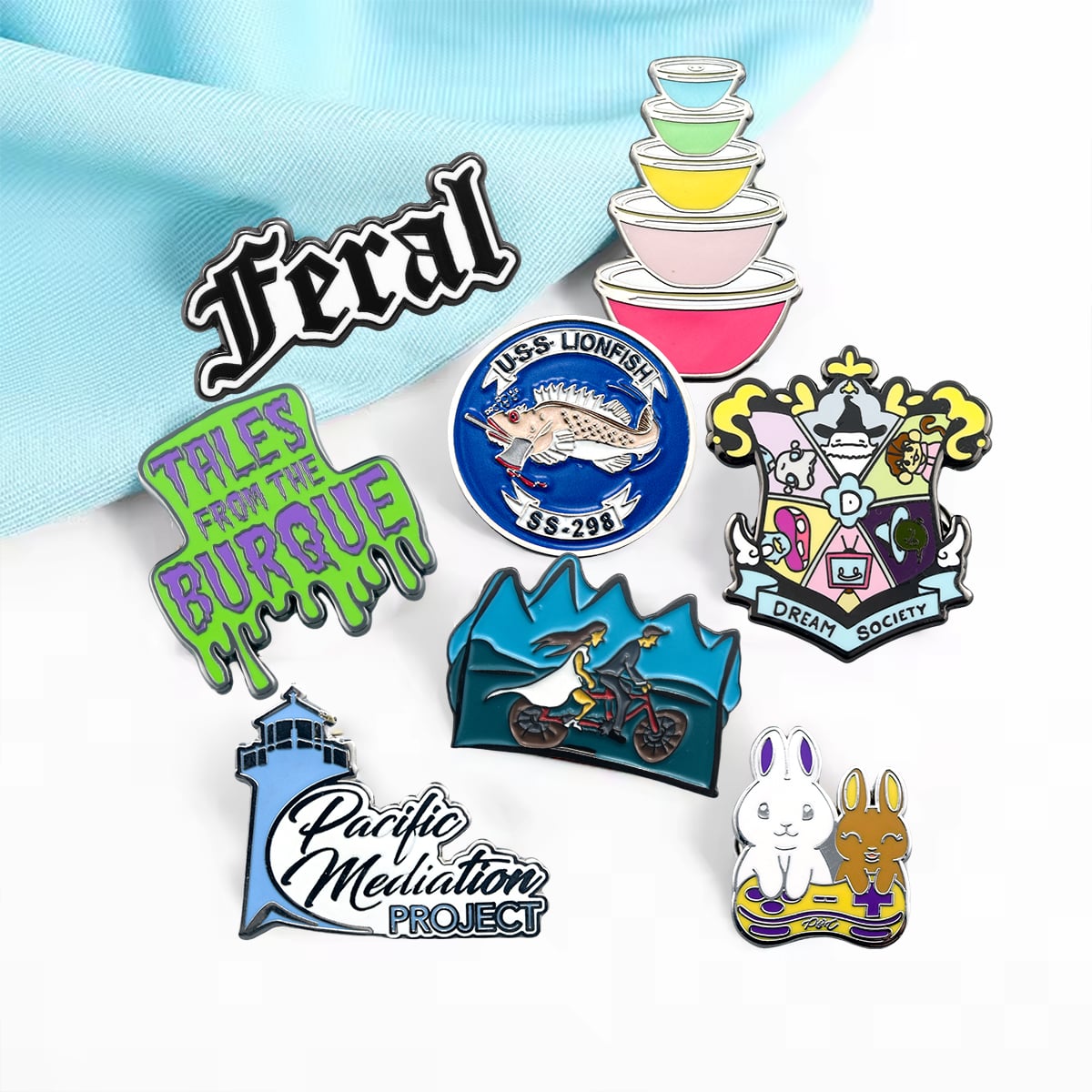
21-year OEM/ODM factory, 5,100 m², free design mockups: Christmas pin motifs, plating and packaging that lift holiday campaign response for B2B buyers.
The Christmas brief usually lands in late October, and by then the calendar decides what is possible — sampling takes 7–10 days, bulk production another 20–35, and freight sits behind both. The second trap is scale: artwork that reads beautifully on a screen loses its detail once it is cut into a 20 mm enamel pin, and buyers only find that out when the sample arrives, with no room left to redesign.
Custom Christmas pins are a straightforward product to get right, provided the motif is simplified before sampling — detail has to be removed on purpose, not discovered at the proofing stage.
Motif |
Why It Works |
Production Note |
Snowflake |
Symmetrical, reads clearly at 18–20 mm |
One plating and two or three enamel colours |
Christmas tree |
Instantly seasonal silhouette |
Keep the outline bold; avoid thin branch lines |
Wreath |
Leaves a blank centre for initials or a logo |
Soft enamel holds fine lettering better than hard enamel |
Bauble with year |
Dated, collectible, drives repeat orders |
Die-cut shape; reserve a clear band for the year |
Star |
Cheapest to run, works in metal alone |
Polished gold with no enamel fill is a valid finish |
Reindeer or Santa |
Highest recognition with families and retail |
Needs 25 mm or more to hold facial detail |
Red and green are not single colours: Brand red has to be matched to a Pantone reference; assuming “red” produces a pin that clashes with the packaging.
Plating sets the tone before colour does. Polished gold reads traditional and warm, polished silver reads modern, and antique gold or silver reads heritage. The same artwork changes character completely across those three options.
Hard enamel versus soft enamel pins: hard enamel is polished flat for a smooth premium surface and better wear; soft enamel leaves the colour recessed with raised metal ridges, holds fine text and thin detail at small sizes, and feels more tactile in the hand.
Domes and glitter finish: An epoxy dome protects printed detail and adds shine; glitter fills suit retail and family audiences more than corporate gifting.
Check the tone in the light it will be seen in: Warm indoor lighting shifts gold noticeably; approve the sample under both daylight and interior light.
Gift-with-purchase at retail: A seasonal pin attached to a minimum spend is a low-cost reason for a customer to add an item to the basket.
Counter and shelf packs: A printed backing card turns the pin into a sellable SKU without repackaging.
Employee holiday gifts: A company logo set inside a bauble shape reads as a gift rather than corporate merchandise.
Client and donor thank-yous: A dated year makes the piece collectible, which is what keeps it past January.
Event favours and fundraisers: Low unit cost makes pins practical at the volumes holiday events actually need.
Companion SKUs work the same campaign harder: custom embroidered patches on the same motif extend the design onto hats, jackets and staff uniforms, so one approved artwork covers several giveaway formats.
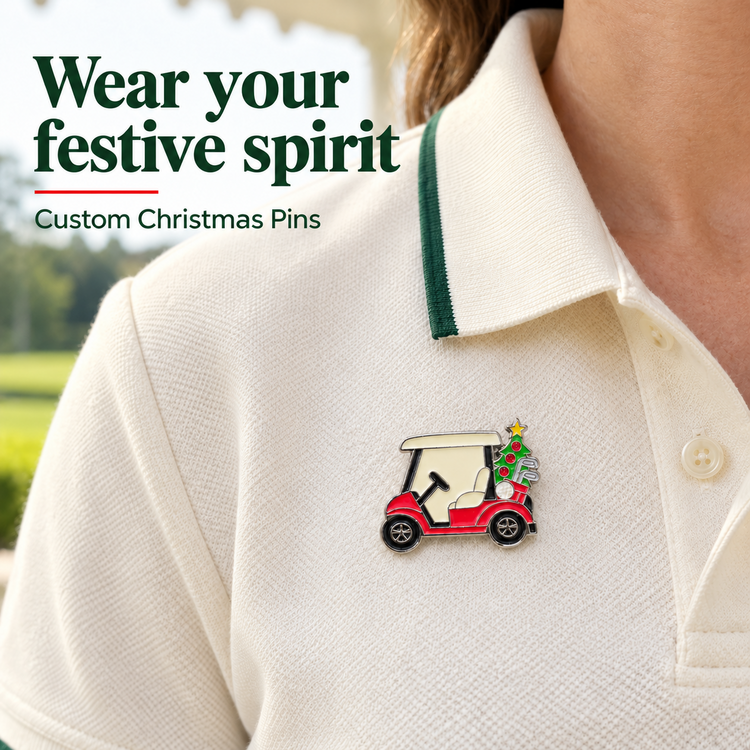
Judge at actual size: Place the sample against a ruler, not zoomed on a screen — most rejected designs fail because the detail disappears at 20 mm.
Count the colour separations: Every additional enamel colour adds a production step; confirm the count now, not after bulk starts.
Compare the plating tone: Hold it against the metal reference under daylight; antique finishes vary batch to batch more than polished ones.
Inspect the enamel fill: Look for bubbles, uneven fill, or colour spilling over the metal lines, especially in tight corners.
Confirm the backing hardware: Rubber clutch, butterfly clutch and deluxe locking backs feel different and are specified separately.
Check the reverse side: A logo stamp or a clean plain back affects perceived quality as much as the front face.
A holiday pin has one delivery window and no second chance: if the sample is wrong in November, the season is gone. That is why the useful question is not the unit price but how quickly a factory can quote, sample and confirm a date — and how plainly it says when a date is no longer possible. Every Unitepins order is produced on the same die-striking and plating lines as our core pin and coin work, with free design mockups and no MOQ for samples, from a 5,100 m² facility with 21 years of OEM/ODM experience.
1. Check certificates and test reports: Ask Unitepins for the current ISO 9001 certificate and relevant RoHS/REACH test reports, including SGS-issued reports where applicable. Check the report date, scope and whether the tested materials and finishes match your order. Confirm any additional buyer requirements before production approval.
2. Lock the specifications and approve the sample: Send the artwork, size, quantity, Pantone references, plating, backing, packaging, delivery destination and required in-hand date with your enquiry. Review the free mockup, then approve the physical sample and packaging proof in writing before bulk production.
3. Agree a dated production schedule: Use 7–10 days for sampling and 20–35 days for bulk production as planning ranges, subject to order details and factory confirmation. Confirm when each stage starts and whether these are working or calendar days. Request dates for sample approval, bulk completion, inspection, packing and dispatch, allowing time for revisions and peak-season capacity.
4. Confirm the shipping plan and total delivery cost: Unitepins coordinates packaging and global shipping. Before ordering, confirm the available shipping service, packed carton dimensions and weight, freight charges and estimated transit time to your destination. Agree the dispatch date and whether a partial shipment can be arranged if needed; compare the planned arrival date and full delivery cost before accepting the quote.
Q: When should a Christmas pin order be placed?
A: Work backwards from the in-hand date. Sampling takes 7–10 days, bulk production 20–35, and freight sits on top. For delivery in late November, artwork and sample approval need to be finished in October.
Q: Can each pin carry an individual name?
A: Yes, but names and dates are applied after the piece is finished, so they form a separate stage. For large quantities, splitting personalisation into a second batch protects the main delivery date.
Q: What size works best for a Christmas pin?
A: 20–25 mm covers most motifs. Reindeer and Santa faces need 25 mm or more to hold facial detail, while a star or snowflake reads clearly at 18–20 mm.
Q: Is hard or soft enamel better for holiday pins?
A: Hard enamel gives a smooth, durable, premium surface. Soft enamel holds fine lettering and thin detail better at small sizes and feels more tactile. The choice follows the artwork, not the season.
Q: Can the pins arrive retail-ready?
A: Yes. Printed backing cards, pouches and gift boxes can be specified with the order, so the pins arrive ready for a counter, a gift bag, or a client package.

Our custom products include lapel pins, 3M Sticker Pins, Challenge coins, Golf ball marker, Keychains, Medals, Bottle openers, Belt buckles, Cuff-links, Lanyards, etc.
 EN




 Hot News